Choose with care
A room that asks a little less of you.
Start with the room you have. Light, sound, comfort and the way people use the space are more useful starting points than a shopping list.
A useful place to begin
- 01
Notice the actual light
Check what reaches the bed during the hours you use it.
- 02
Find the disturbance
An identifiable sound or comfort issue is easier to address than a vague ideal.
- 03
Make it liveable
Include cleaning, safety, shared preferences and the budget you have.
The guide
Walk through the room at the time you use it
A bedroom photographed in daylight may feel different at bedtime. Look for the streetlight that reaches the bed, the sound that repeats overnight or the controls you cannot easily reach. Choose a specific disturbance to investigate. “The room should be more restful” is harder to act on than “that light falls across my pillow.”
NIOSH's guidance on the sleep environment considers darkness, quiet and comfortable temperature. Turn those ideas into observations about your own room rather than a demand to create a perfectly silent, completely controlled space.
Compare functions, not matching accessories
For light, consider where it enters and what can reasonably block it. For sound, identify its source before deciding whether an accessory is appropriate. For warmth, look at the room, bedding and the other person sharing it. Our articles on bedroom noise and hot nights offer more focused starting points.
If you do buy something, ask about fit, cleaning, adjustability, return conditions and the practical consequences of daily use. Maintain safe movement around the room and access to important alarms. A comfortable solution should fit how the home actually works.
Leave space for different preferences
A shared room is also a shared agreement. One person may read late or prefer different bedding. Name the particular conflict, discuss an adjustment and leave room to change your mind. Our guide to different sleep needs in one home helps make that conversation specific.
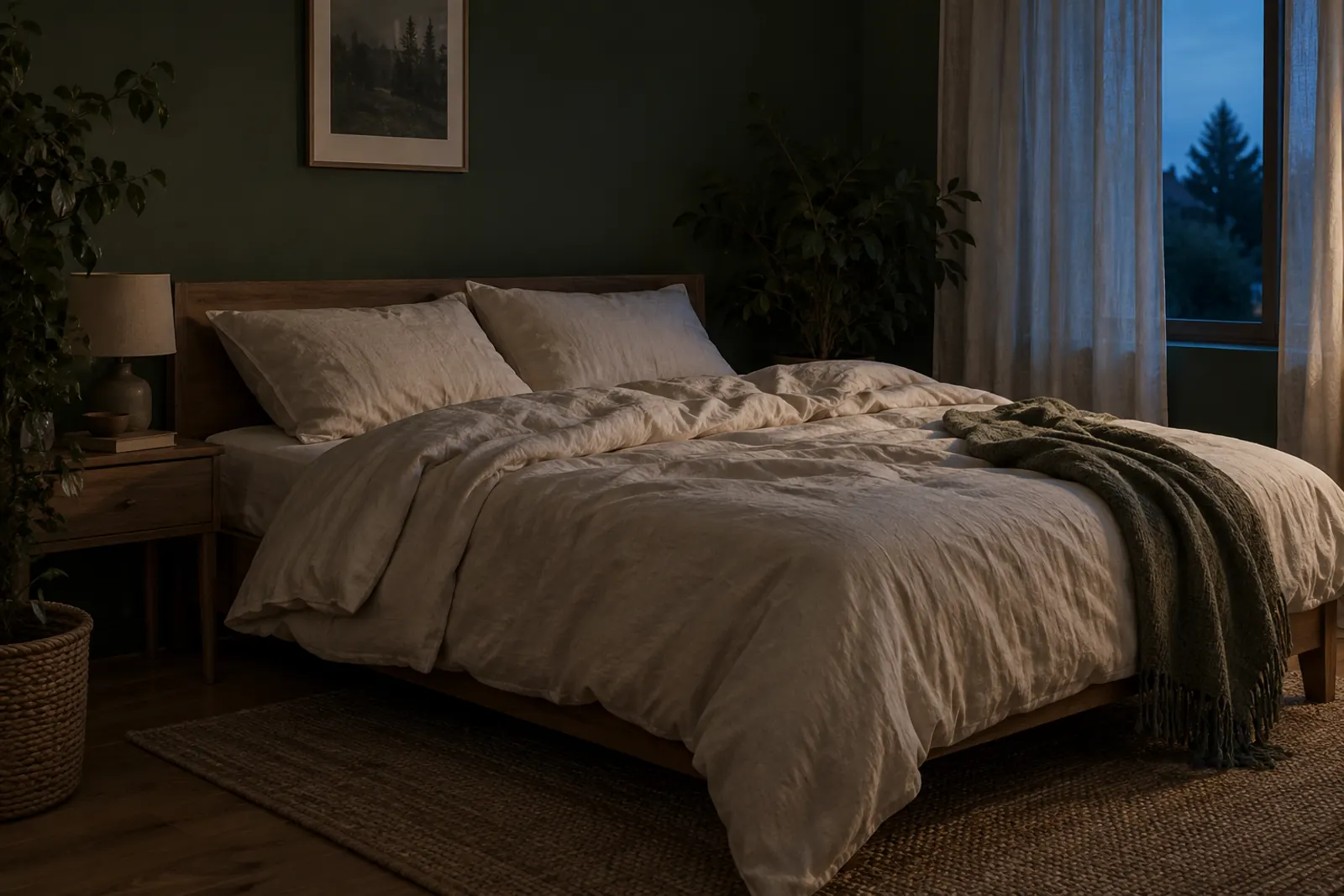
This is an editorial selection guide, not a list of products we have personally tested. The photographs illustrate an atmosphere; they do not certify that a pictured room or item improves sleep. If discomfort or sleep disruption persists, a room purchase may not be the answer and an individual assessment may be useful.
Written by Marek Bdžoch with AI assistance. Educational editorial content, not individual medical advice. How our content is made.
Keep exploring




Your questions, answered
What should I check before buying bedroom products?
Identify a specific light, sound or comfort issue at the time you sleep. Then consider whether an existing feature or household arrangement can address it.
Must the bedroom look minimalist to be restful?
No particular visual style guarantees sleep. Focus on practical conditions and what makes the room comfortable to use.
Are blackout curtains always the first purchase?
Only consider a purchase in relation to an actual need. Check where unwanted light enters and what existing options you can adjust.
Should I buy earplugs or a sound machine?
Start by identifying the sound and consider comfort, practical use and the need to hear important signals. This guide does not rank or personally test those products.
Is one exact bedroom temperature right for everyone?
Personal comfort, bedding and circumstances vary. Our hot-weather article helps you think about the whole setup rather than chase a universal number.
What if we disagree about the duvet or temperature?
Describe the specific discomfort and discuss an arrangement both people can use. Shared sleep does not require identical preferences.
Will a new mattress solve disrupted sleep?
A purchase cannot explain every cause of waking or discomfort. Define the problem first, check return conditions and seek appropriate advice for persistent symptoms.
What safety details should I consider?
Keep routes around the room clear and consider access to alarms and essential signals when changing light or sound conditions.
Do the photos show products you endorse?
No. These illustrative scenes support the editorial design; they are not evidence of testing or an endorsement of particular items.
Where can I find a general buying checklist?
Our Sleep products guide covers claims, costs, maintenance and evidence. Use it alongside the articles about the specific disturbance you want to address.