Choose with care
Useful data. A little perspective.
A number can start a useful question. It should not have to decide how you feel about your night, or replace a conversation about symptoms.
A useful place to begin
- 01
Start with a question
Know what you want to understand before choosing a dashboard.
- 02
Read the validation
Ask what was compared, in whom, and for which specific measurement.
- 03
Keep your own context
Comfort, privacy, costs and how you feel matter alongside the numbers.
The guide
Decide what you want the information for
Perhaps you want a rough record of bedtime, a way to notice changes in routine or something concrete to discuss at an appointment. Name that purpose before comparing dashboards. The most elaborate screen is not necessarily the most helpful one for your question.
Start with your watch does not know the whole story. Then consider what you would actually do differently after receiving the information. If every result produces more checking but no useful decision, the presentation may deserve as much attention as the measurement.
Ask what has been validated
Validation is not a permanent badge that answers every question. Look for the device model, software version, people studied, comparison method and measure being assessed. Accuracy for one measurement should not be assumed to establish accuracy for every number on the screen. Our validation guide helps you read those details.
The American Academy of Sleep Medicine's consumer-technology statement explains why consumer data needs careful interpretation in clinical use. Product capabilities change, so check the current intended use of a specific feature. A general wellness score should not be treated as a diagnosis or as proof that a sleep disorder is absent.
Include the less photogenic details
Check comfort, battery life, charging routine, subscription requirements, data export and deletion. Consider whether useful information remains available if you change phones or stop paying. Read the privacy explanation before connecting additional services.
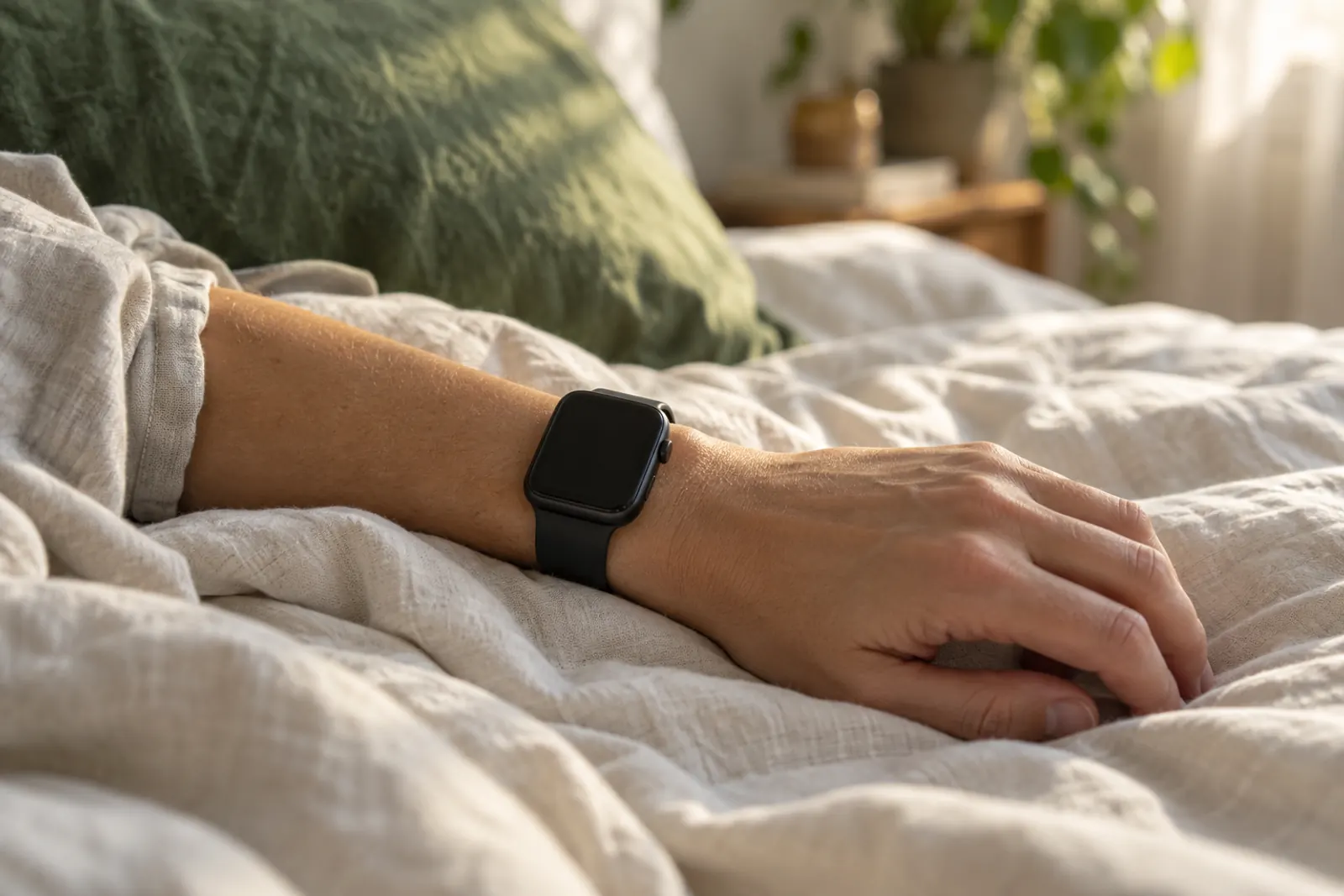
Keep your own experience beside the dashboard. Persistent daytime sleepiness, breathing concerns or other symptoms deserve professional attention even when a score looks good. You can bring data to that conversation without needing to interpret every chart yourself. These are editorial buying questions, not hands-on ratings; the watch photograph is illustrative and does not endorse a model.
Written by Marek Bdžoch with AI assistance. Educational editorial content, not individual medical advice. How our content is made.
Keep exploring




Your questions, answered
Do I need a tracker to understand my sleep?
No. A simple diary and your daytime experience can provide useful observations. A device is an optional source of information.
What should I decide before buying one?
Name the question you want it to help answer. Then compare relevant measurements, comfort, ongoing costs and access to your data.
What does validated mean?
It means a particular measurement has been compared with a reference under specified conditions. Read which device, people and outcomes were involved.
Can I compare sleep scores from different brands directly?
Different systems may calculate and label scores differently. Similar-looking numbers do not necessarily represent the same measure.
Are deep-sleep minutes an exact laboratory measurement?
Consumer devices estimate aspects of sleep using their sensors and algorithms. Our sleep-stages and validation articles explain the distinction.
Can a reassuring score rule out sleep apnoea?
No. A general score does not replace evaluation of symptoms. Check the intended use of any specific medical feature and discuss concerns with a clinician.
What if the numbers make me more worried?
Consider whether frequent checking is helping you. You can step back from the dashboard and discuss ongoing concerns with a healthcare professional.
What privacy questions should I ask?
Check who receives the data, what sharing is optional, how to export or delete it and what happens when you disconnect a service.
Should I bring wearable data to an appointment?
You may bring it alongside symptoms and a short description of your schedule. Let the clinician decide what is relevant rather than treating the graph as a diagnosis.
Which device do you recommend as the best?
This guide does not claim comparative hands-on testing. It provides questions for choosing a suitable tool and links to explanations of the evidence.