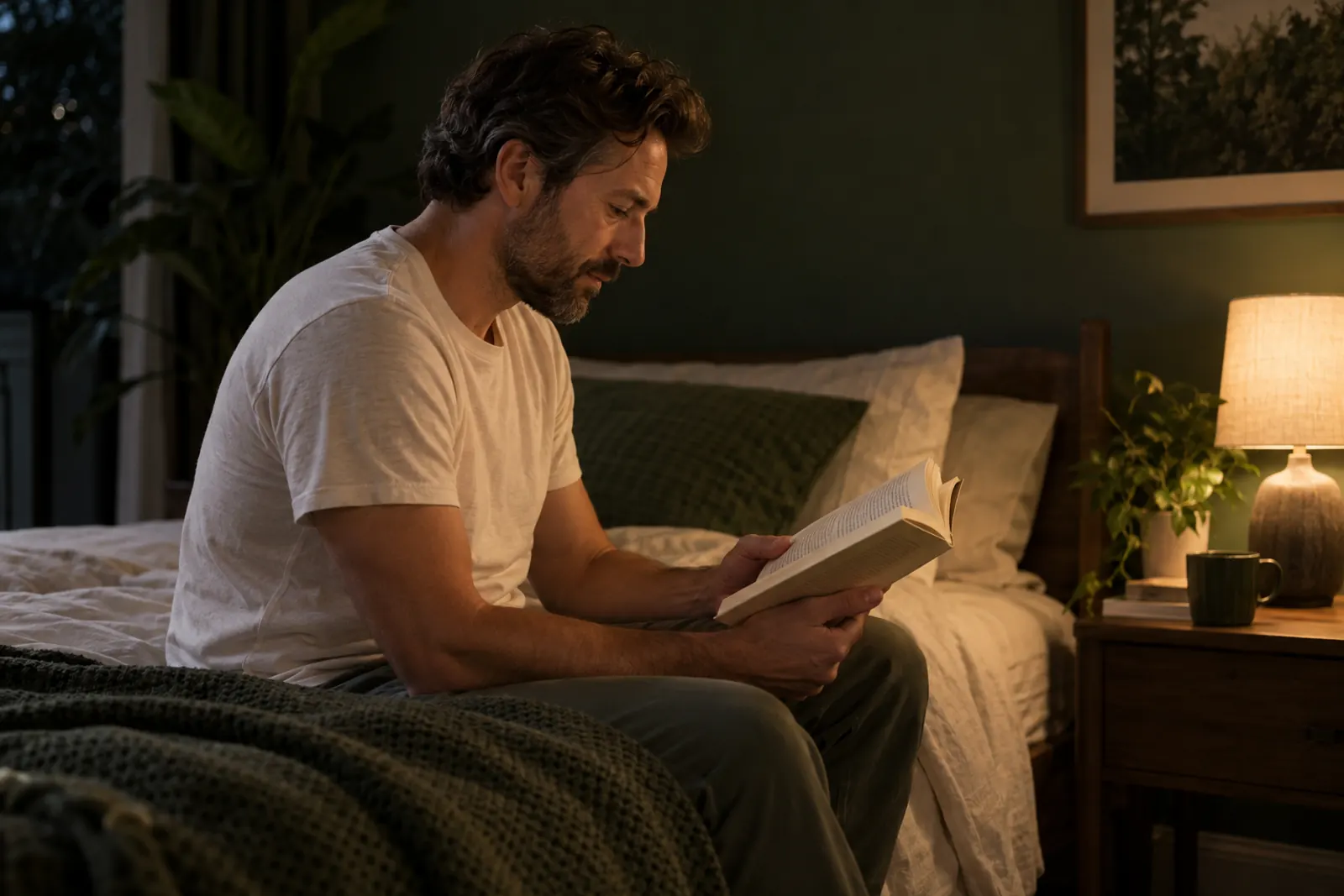
03 / EVENING CALM
For today,you have done enough. — Evening calm
Switching off a light can be easy. Quieting a whole day takes a little more room. Find your own way from responsibility to rest.
Najdi svůj začátekNEJDŘÍV SOUVISLOSTI
Take one thing away. You do not need another ritual.
A calmer evening does not need ten steps, a new app or special equipment. It can begin with leaving one task until tomorrow. Rest also comes from doing less, and each evening is allowed to look a little different.
Put a full stop on the day.
Write down what needs doing tomorrow and where you will return to it. A short list can mark the end of the working day. It does not have to solve every worry; it simply gives those thoughts a place outside your bed.
A little less going on.
Look around the room. What could stop beeping, shining or waiting for a reply tonight? You might try leaving your phone on a charger out of reach. Choose an adjustment that still accommodates caring responsibilities and other real obligations.
Rest is not an assignment.
Reading, quiet music or a little unstructured time. The idea is a pleasant transition, not something to perform perfectly. If sleep does not arrive straight away, it does not mean you got the evening wrong.
Články k tomuto tématu právě připravujeme.
JEDEN MALÝ KROK PRO TEBE
What can wait tonight?
Choose one thing you usually deal with after getting into bed. Move it somewhere else or set aside time for it tomorrow. Then resist grading the evening by how quickly you fall asleep. This is an invitation to slow down, not a test.
Vlastním tempem. Bez hodnocení.MOŽNÁ TĚ NAPADÁ
Ještě pár otázek.
What can I do when worries arrive as soon as I get into bed?
Try giving them a little space earlier in the evening. Write down what is on your mind and, where possible, one step for tomorrow. You do not have to solve everything in bed. The aim is to take some pressure off your memory, not to turn worry into another nightly assignment.
How long should an evening routine take?
There is no required length or number of steps. A short transition that fits your life can be enough: finish work, soften the lighting and read for a while. If maintaining the routine becomes stressful, simplify it. A calm evening is not a test of discipline.
Is night mode on my phone enough?
Screen colour is only part of the picture. Brightness, timing and what you do on the phone matter too. A warmer screen can still keep you answering messages or postpone bedtime. Consider when you finish work and engaging content, alongside adjusting the display.
Do I have to meditate to sleep well?
No. Meditation is one possible way to unwind, and it does not suit everyone. A book, quiet music or a simple pause may feel more natural. None of these activities alone should be presented as a cure for persistent insomnia. Ongoing problems deserve appropriate assessment and treatment.
Can I try a breathing exercise without holding my breath?
Yes. Sit or lie comfortably and let your breathing stay gentle. You can count if that feels helpful, without forcing a deep breath or meeting a particular number. There is no need to hold your breath. Return to normal breathing if an exercise feels uncomfortable.
Should I stay in bed until I finally fall asleep?
If you are awake and getting increasingly tense, trying harder can make the bed feel like a place for frustration. A quiet activity elsewhere, returning when sleepy, can help break that pattern. Avoid turning it into a stopwatch exercise. For persistent insomnia, this is best understood within a wider treatment plan.
Why does checking the clock sometimes make the night feel worse?
It can start a countdown: how much sleep is left, how tomorrow will go, and why you are still awake. Set your alarm once and consider turning the clock away. The point is to remove a prompt for worry, not to forbid yourself from knowing the time.
Will a warm bath help me fall asleep?
A warm bath or shower can be a pleasant way to wind down. It is optional, not a requirement for good sleep or a protocol you have to time perfectly. Choose a comfortable temperature and a routine that feels manageable. If baths do not suit you, another quiet activity is fine.
Does a drink in the evening help with sleep?
Alcohol can initially make you feel sleepy, but it can also disrupt sleep later in the night. Falling asleep more easily does not necessarily mean sleeping better. If you increasingly rely on alcohol to settle down, or are concerned about dependence, seek professional support rather than treating it as a sleep aid.
Is a podcast or rain sound a good bedtime habit?
It can be a comfortable background if it stays quiet and does not keep you engaged. Try a timer if playback continues through the night. Notice whether you are relaxing or waiting for the next episode. There is no need to add sound if you prefer silence.
What if an uncomfortable urge to move my legs keeps me awake?
A recurring urge to move your legs, especially with uncomfortable sensations in the evening, is worth discussing with a clinician. Different problems can affect comfort at night, and a description alone cannot establish a diagnosis. Avoid starting iron supplements without an assessment of whether you need them.
I have tried every evening tip. What now?
Persistent insomnia is not evidence that you have failed to relax properly. Cognitive behavioural therapy for insomnia, or CBT-I, is recommended as an initial treatment for long-term insomnia. A clinician can help assess contributing problems and suitable care. Making an already demanding bedtime routine stricter is not always the answer.
VŠECHNO SPOLU SOUVISÍ