
You wake up feeling reasonably rested. Then you open the app and see a poor score. Which of those two pieces of information gets the last word?
Wearable technology can offer an interesting view of your habits. But its output is still the result of measurements and calculations with certain limitations. It is not a complete record of how you slept or how you will function.
An estimate is not a diagnosis
In a 2018 position statement, the American Academy of Sleep Medicine emphasised that consumer sleep technology should not replace a clinical assessment. That statement is older, and individual devices have changed since then. For any particular feature, look for current validation and a clearly defined purpose.
Findings about one watch model cannot automatically be applied to every other device. Nor is every chart of sleep stages equivalent to an assessment in a sleep laboratory.
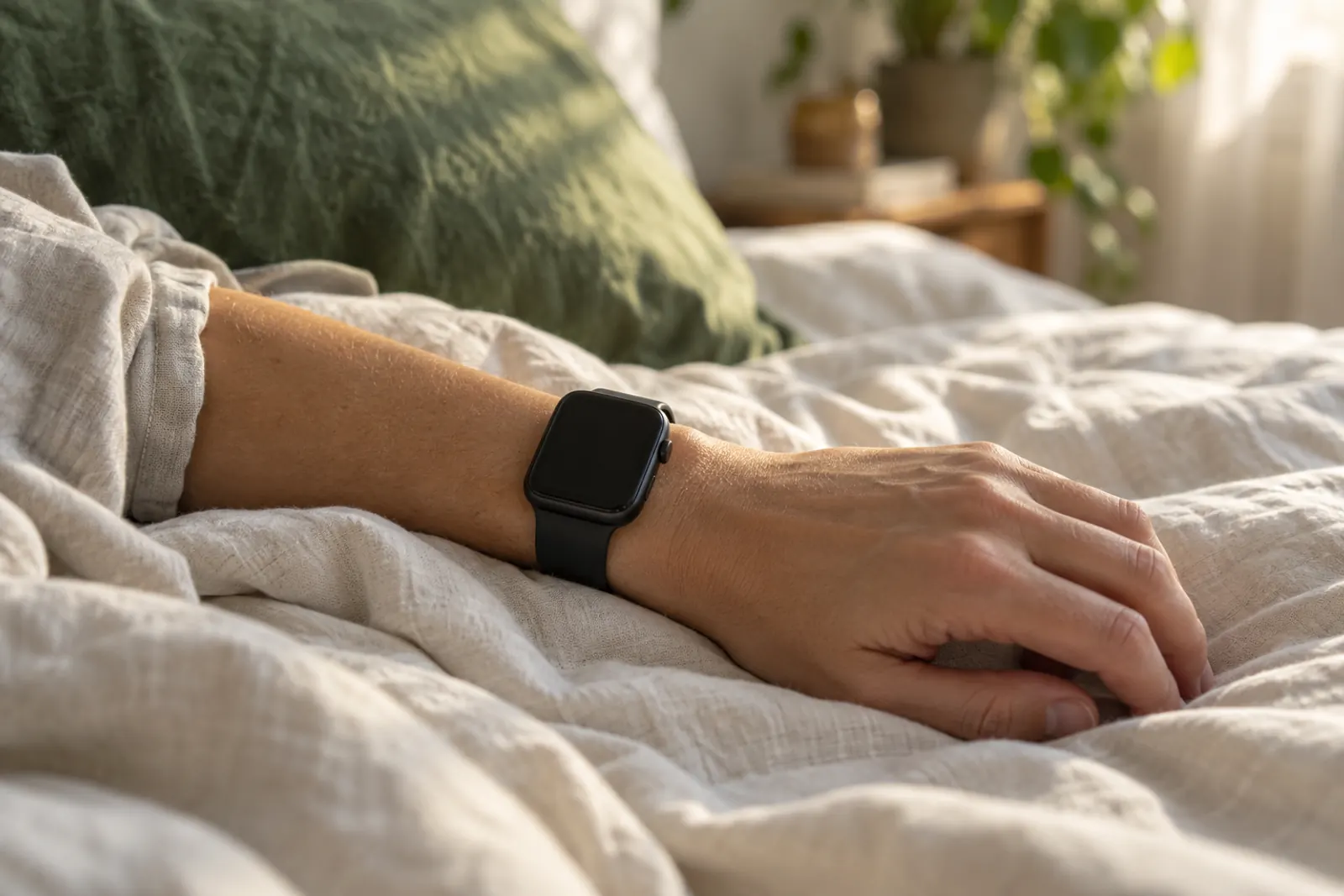
Add a note of your own
Our editorial suggestion: before looking at the numbers, describe how you feel that morning in one sentence. Then look at the data as another piece of information. This is not a substitute for professional interpretation; it simply leaves room for your own experience too.
When looking through charts, notice the wider context. Was the past week unusual? Did your routine change? Could the recording be incomplete? An app may not know all the circumstances that you do.
When to put the chart aside
If tracking mainly makes you anxious, consider taking a break from assessing it every day. You do not need a grade for every night to take rest seriously.
Discuss persistent fatigue, marked sleepiness or other concerns with a doctor even if your watch shows a good result. The reverse is also true: a low score alone is not a diagnosis of a health condition.
Take this with you: data should add context. Decisions about health also depend on symptoms, medical history and, where appropriate, an examination.
Our sources
Research and further reading. Practical suggestions are editorial ideas, not a personalised treatment plan.
Created and translated with AI assistance, with editorial checks and linked sources. No human clinical review has been performed.






