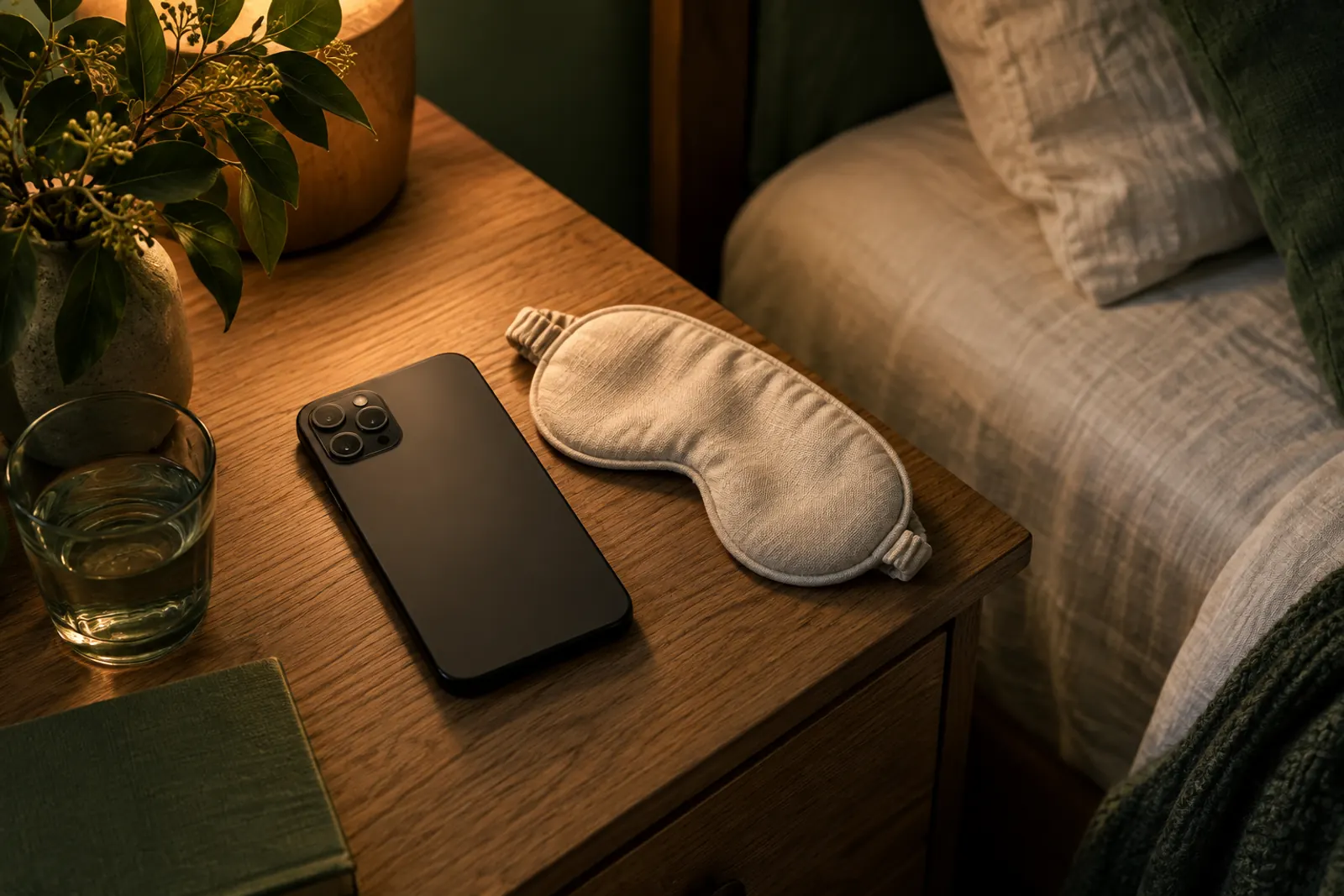
It is ten in the evening, and the list of recommendations for better sleep looks like another work assignment. Dim the lights, put away your phone, meditate, stretch, write in a journal. If the list itself is wearing you out, start crossing things off it.
The point of winding down is not to create another performance. It is to leave some space between everything the day asked of you and the moment you can stop responding.
Choose one pleasant thing
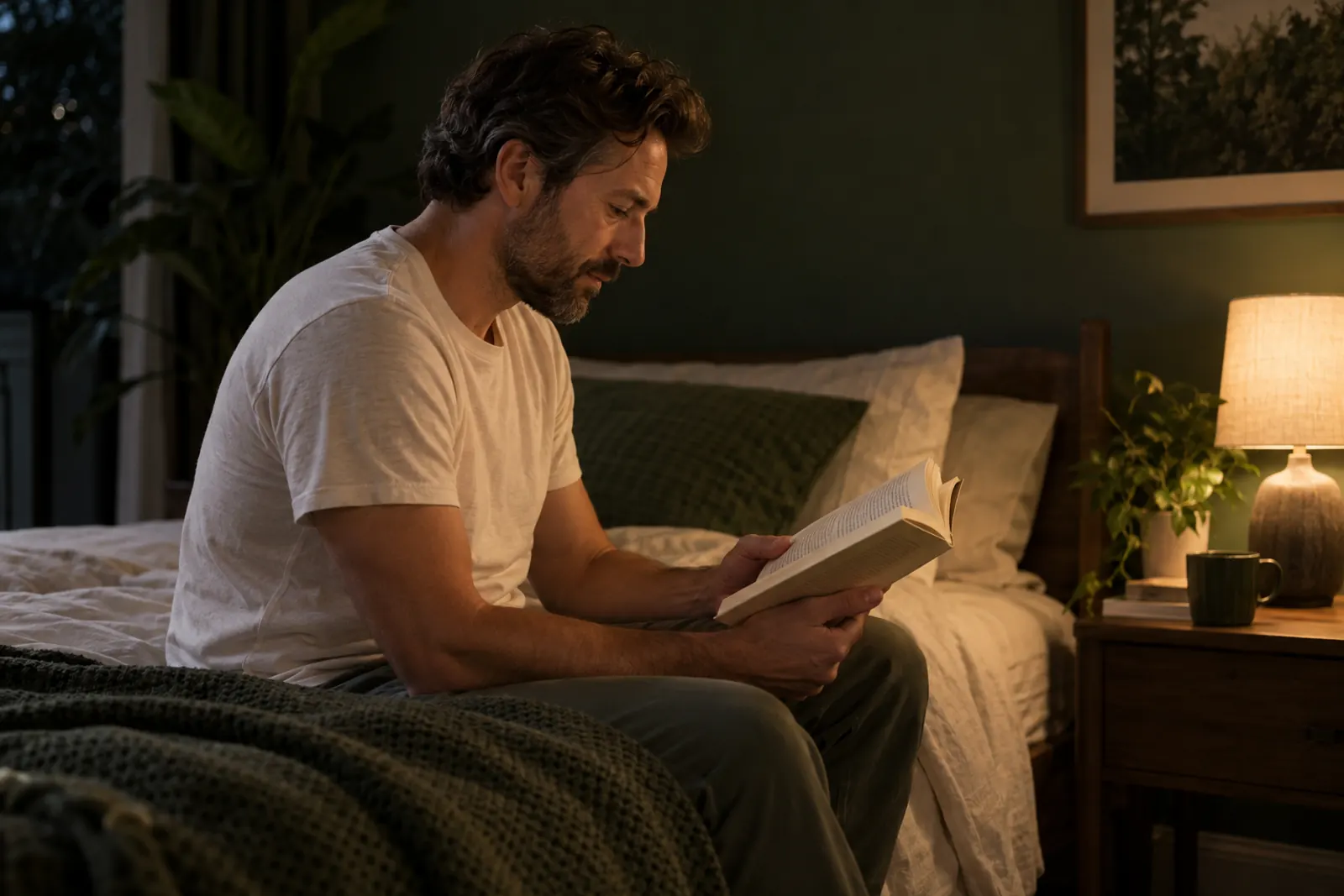
The NHS recommends taking time to relax before bed and keeping a reasonably regular routine. That can take many forms. A few pages of a book, quiet music or getting things ready for the morning are personal choices, not a prescribed sequence.
Our suggestion: write down two things that usually leave you feeling less rushed. Then pick the simpler one. If you have young children, it might be five quiet minutes after they fall asleep. If you get home late, perhaps it is just a slower transition from work into your evening at home.
Your phone does not need the last word
It is not only about the light from the screen. Ask yourself a straightforward question: what am I actually doing on my phone? A work message or a heated discussion can be the opposite of a quiet end to the day. Try choosing a place in advance where you will leave your phone in the evening. This small organisational experiment needs no new app.
What if tonight does not go to plan?
Dinner with friends runs late. A child wakes up. A deadline arrives. A routine should serve your life, so allow for evenings that do not fit it. Do not judge the night in advance by whether you completed every step.
A pleasant ritual alone may not resolve persistent difficulty falling asleep. If your sleep is not improving or the problem is affecting your day, speak to a doctor.
For tonight: choose one quiet activity you actually want to do. Nothing to buy, nothing to tick off, and no obligation to get it perfect.
Our sources
Research and further reading. Practical suggestions are editorial ideas, not a personalised treatment plan.
Created and translated with AI assistance, with editorial checks and linked sources. No human clinical review has been performed.