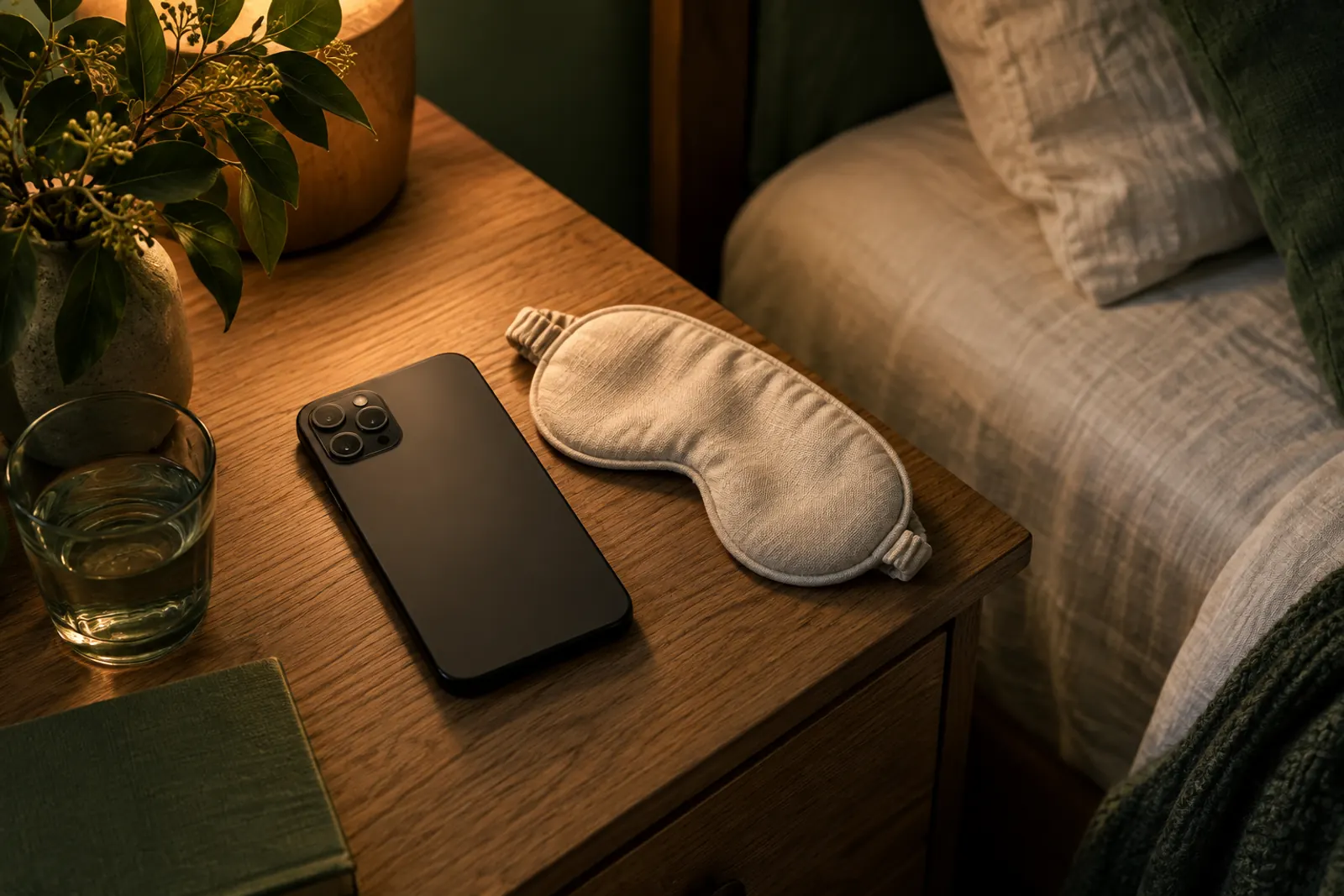
You open your eyes and reach for your phone. Suddenly you know the time, what has happened in the world and who has not replied. That first awakening now has several new storylines.
First, notice what you need
Do you need the toilet? Are you uncomfortable or in pain? You do not have to ignore a practical need for the sake of 'correct' sleep. Match lighting and movement to safety. If you are at risk of falling, finding your way through darkness is not a useful goal.
The NHS lists repeated wakefulness during the night among possible symptoms of insomnia. A single awakening, without more context, does not reveal the cause or establish that something is medically wrong.

Avoid automatically adding more activity
Our suggestion is to distinguish a necessary response from a habit before the night begins. Checking on a child may be necessary. Opening your work inbox is usually a different decision. If you need to be reachable, allow the relevant contacts to get through without having to read everything else.
You do not have to use the night to catch up on unfinished daytime tasks. Completing something may feel like a win, but it is worth asking whether it needs your attention right now.
Record the useful details in the morning
If awakenings recur, note the circumstances and their effect on your day. Skip unnecessary precision: you do not need to check the clock at every turn to keep a diary.
Speak with a doctor about persistent difficulty, gasping for breath, pain or marked daytime sleepiness. A muted phone should not hide a health problem. Do not change your medication or add sedatives based on an article either.
For your next night: prepare the things you genuinely need within reach. Everything else can wait until morning. If you wake up, your entire working and information world does not have to wake up with you.
Our sources
Research and further reading. Practical suggestions are editorial ideas, not a personalised treatment plan.
Created and translated with AI assistance, with editorial checks and linked sources. No human clinical review has been performed.