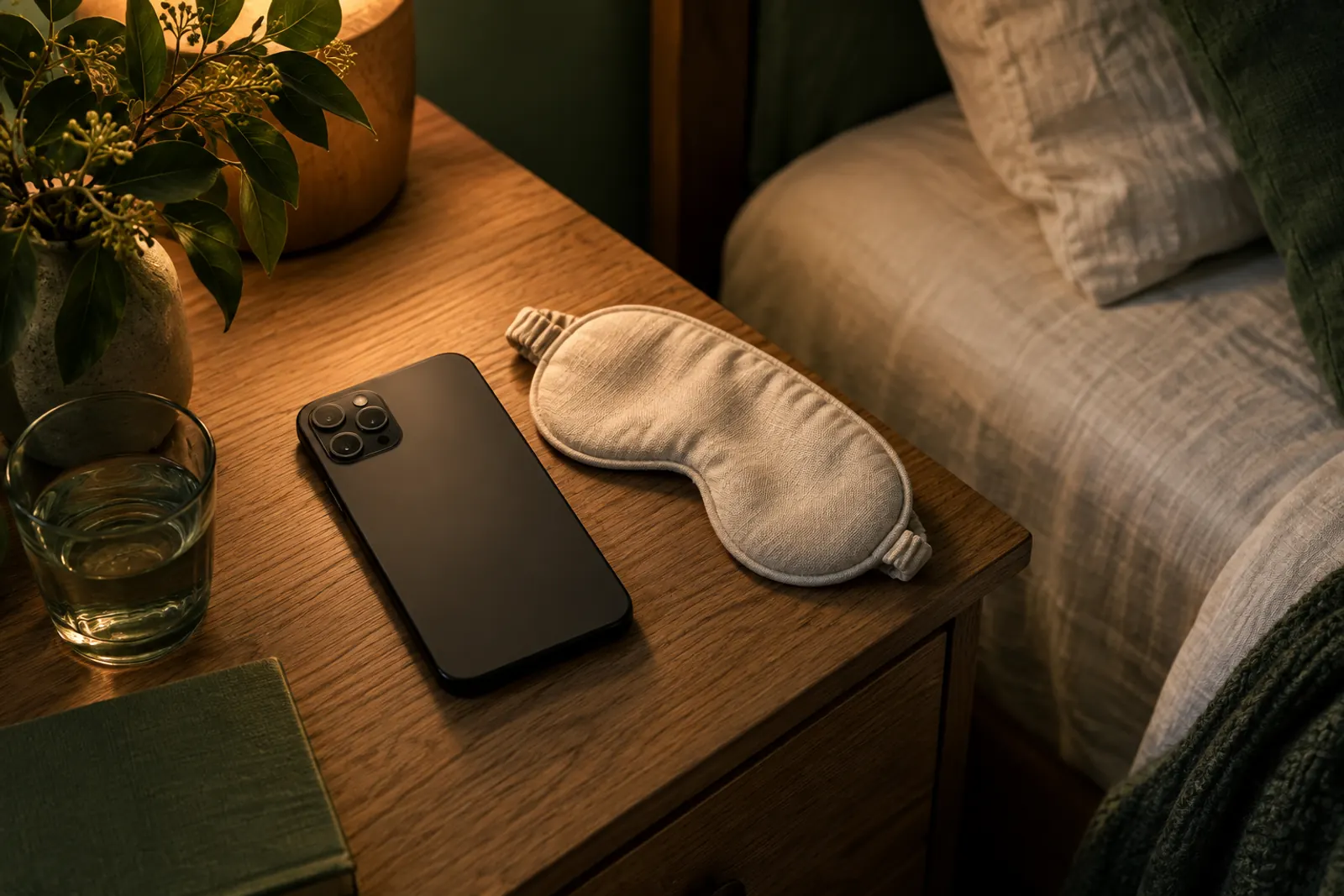
You lie there waiting, and the longer you wait, the harder you try. Sleep does not work like a task you can complete by applying more pressure. On a difficult evening, it helps to have a simple option for what comes next.
What general guidance suggests
The NHS advises against forcing sleep. If you cannot fall asleep, it may help to get up briefly, do something quiet and return to bed when you feel sleepy. Your choice needs to fit your health and your ability to move around safely at home.
This is not a universal treatment for insomnia. If you already have a plan from a professional, follow that plan and discuss any questions at your appointment.

Prepare an undemanding option
Our practical suggestion is to choose a place and an activity in advance that ask very little of you: a few pages of a familiar book or something quiet to listen to. Avoid turning it into a chance to finish another work task.
You do not need to check every minute to follow an internet rule exactly. The aim is not a nighttime timetable with an alarm. Instead, notice when waiting has become a prolonged struggle and a quiet change of activity seems sensible.
Leave tomorrow some breathing room
While you are awake, your mind may predict a disastrous next day. You do not have to plan the whole thing now. Necessary practical changes can be considered in the morning, based on how you actually feel.
If nights like this are frequent, continually searching for a better quiet activity is not enough. Note how the difficulty unfolds and affects you, and speak with a doctor. Cognitive behavioural therapy for insomnia is structured care; this small suggestion does not replace it.
Give yourself permission in advance: if tonight is difficult, you do not have to argue with sleep in bed. You can change activity, stay safe and return to rest without demanding that one approach work immediately, every time.
Our sources
Research and further reading. Practical suggestions are editorial ideas, not a personalised treatment plan.
Created and translated with AI assistance, with editorial checks and linked sources. No human clinical review has been performed.